We handle Polaris RZR Fire Cases Nationwide

Polaris RZR:
Fire Safety Checklist
Polaris RZR Checklist:
Fire Risk, Safety, Rights
Since 2011, over 675 Polaris RZR off-highway vehicles have erupted in flames during normal operation. Not from crashes or rollovers, either, but on established trails and sand dunes. Fires spread so fast that passengers often cannot unbuckle their seatbelts before suffering catastrophic burns.
These fires are not random accidents. They are the predictable result of a design defect Polaris has known about for over a decade and has never fully fixed. Multiple recalls have replaced individual components, but none have eliminated the core problem: an extremely hot exhaust header positioned inches from the fuel lines, fuel pump, and fuel rail injectors.
This checklist will not make a defective RZR safe. But it may help you identify warning signs before a fire erupts, and it will help you understand exactly what you are dealing with when you ride.
1. Know Your Vehicle's Risk Level
Highest-Risk Models
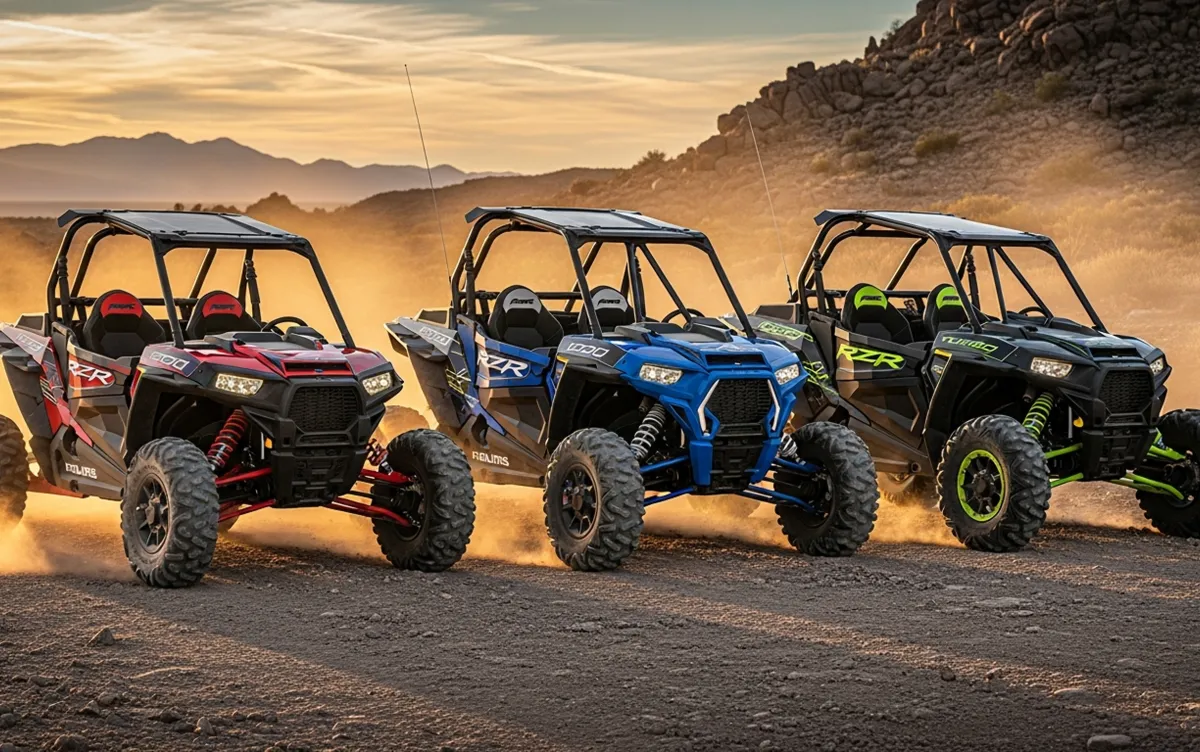
These models feature the forward-facing exhaust header design that has caused hundreds of fires:
RZR Model 900 (all years from 2011 to present)
RZR Model 1000 (all years)
RZR Turbo models (all years)
These are the vehicles at the center of hundreds of documented fires. If you own or ride one of these models, every item on this checklist applies directly to you.
Lower-Risk Models
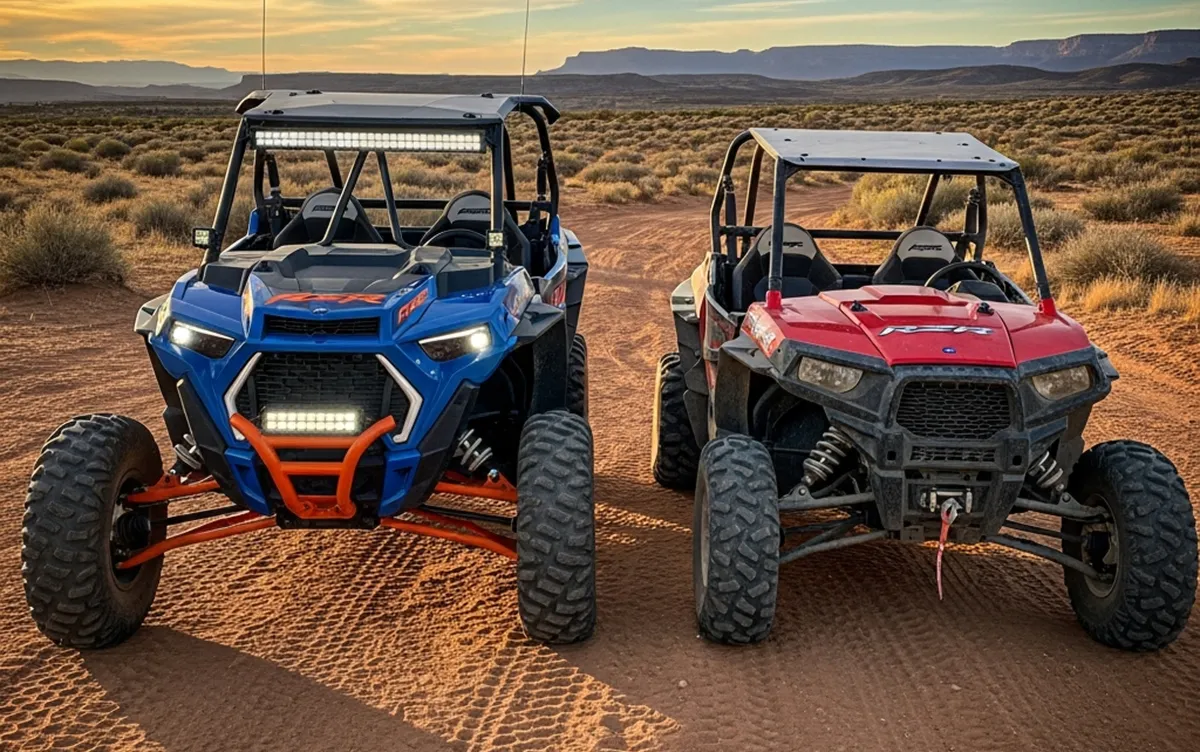
RZR Pro R (2022 and newer): Polaris redesigned the exhaust header on the Pro R to face sideways, away from the passenger compartment, similar to the older Model 800 design. As of mid-2025, there is no significant fire history for the Pro R. Polaris has known how to build a safer RZR. The Pro R is the proof.
RZR Model 800 (pre-2011): The original side-facing header design had no substantial fire history
While these models pose a lower risk for fire, defects are still possible and safety checks recommended.
2. On-Ride Monitoring
Stop immediately if you notice any of the following:
Any smoke from the rear of the vehicle: RZR fires erupt from the engine compartment behind the passenger seat. Smoke appearing there is a serious fire warning.
Any fuel smell during operation: A fuel odor during a ride means fuel is reaching the exhaust area. This is an emergency.
Unusual heat behind or beneath the passenger seat: The exhaust header behind the passenger seat reaches temperatures exceeding 1,000°F during normal operation. Unusual heat radiating upward into the cab is a warning sign.
Any warning lights or gauge abnormalities: Electrical failures have caused fires before. Take warning lights seriously.
Fire behind the seats: RZR fires spread in 30 to 60 seconds. You have almost no time to react. If you see signs of a fire, don’t try to stop the spread or wait it out. Get out of the vehicle immediately.
3. Practicing Child Safety
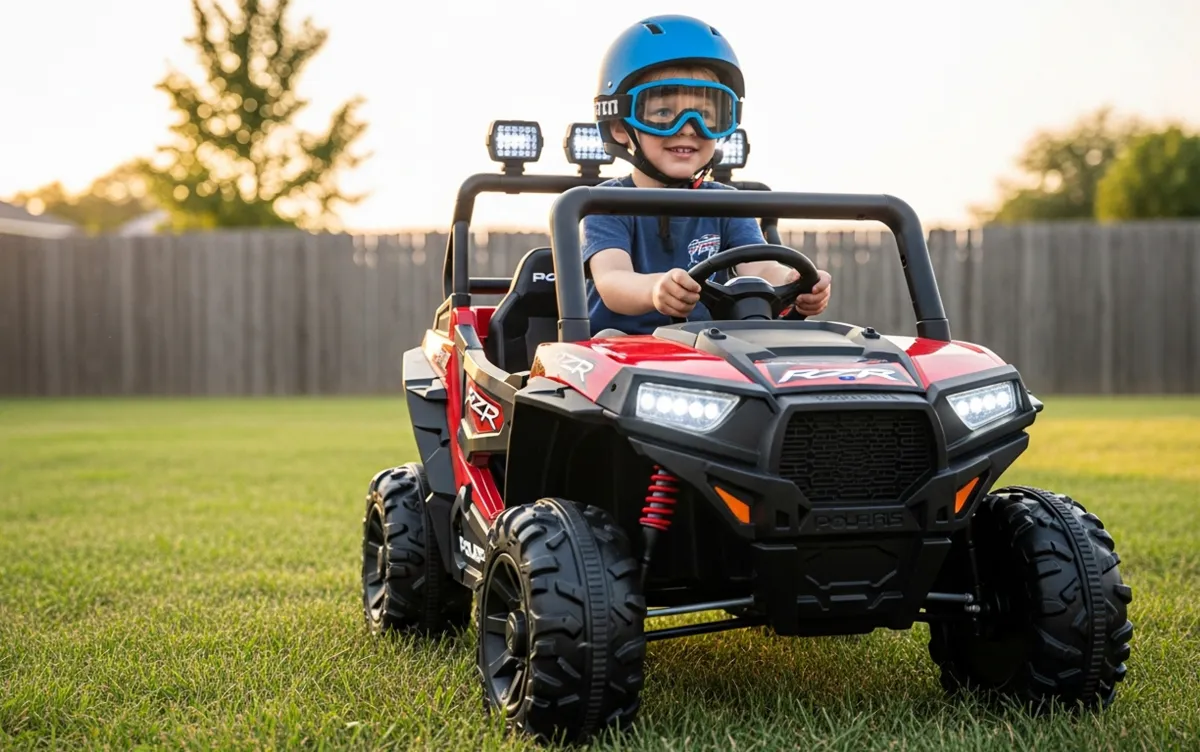
Children are disproportionately at risk in RZR fires for several reasons:
Many child passengers ride in the back seat, directly in front of the super hot spot where fires typically originate.
Smaller children's bodies suffer more severe consequences from the same percentage of burns.
Children may struggle to unbuckle four- or five-point harnesses quickly under stress.
Young children may freeze in fear rather than move toward an exit.
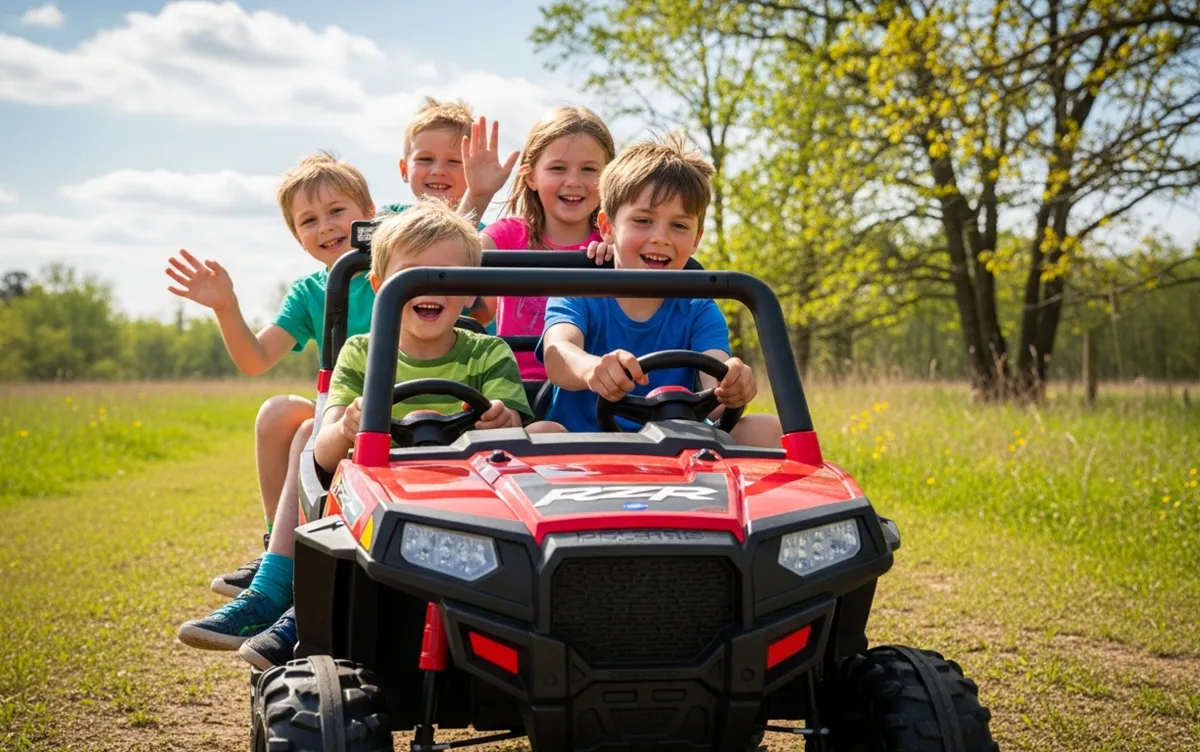
We strongly recommend that children NOT ride in the 900, 1000 and Turbo RZRs!
This warning is especially important for children in a car seat.
It takes even more time to get a child out of a car seat along with the nearby adult.For children riding in other models ...
Practice the unbuckle-and-exit sequence before every trip. Children should know how to release their own harness. Practice it as a game. Make it automatic.
Assign an adult in the vehicle to assist the nearest child in an emergency. Every second matters. Know who is responsible for which child before you start riding.
Ensure children know to exit immediately if they smell smoke or see fire. Do not let children assume an adult will handle it.
4. After a Fire: Protecting Your Safety and Your Rights
These steps cover the specific failure points most closely associated with documented RZR fires.
Run through this checklist before every ride, especially at the start of a season.
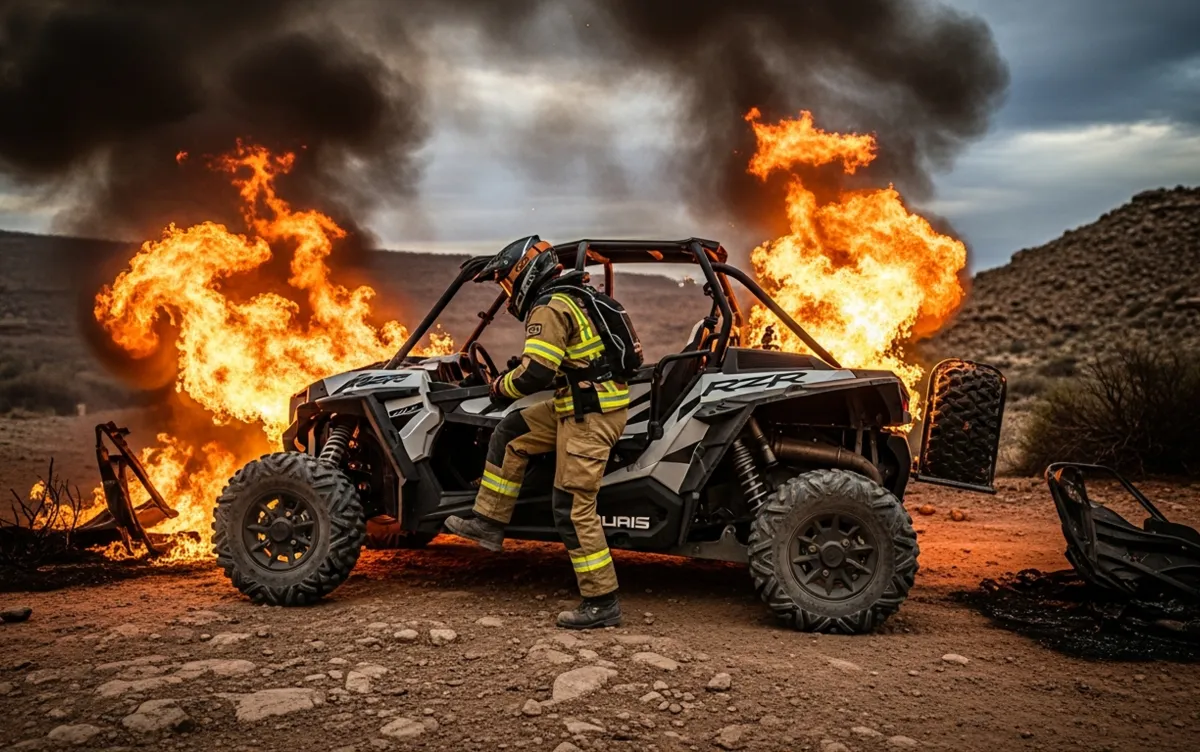
First Priority: Get Everyone Out and Get Help
Stop the vehicle immediately. Shut off the engine if you can do so without delay. Every second spent moving is a second lost escaping.
Unbuckle and exit immediately. Getting out is the only priority. Help passengers exit as you go, paying particular attention to children in rear harnesses, who may struggle to release themselves under stress.
Move far away from the vehicle. RZRs burn completely and can continue to spread after the initial ignition. Put as much distance as possible between your group and the vehicle before doing anything else.
Call 911. Do not attempt to fight the fire yourself. Even if the flames appear to be dying down, do not assume the danger has passed. Wait for emergency services to respond.
Do not return to the vehicle for any reason. There is no safe way to approach a burning RZR and no good reason to do so.
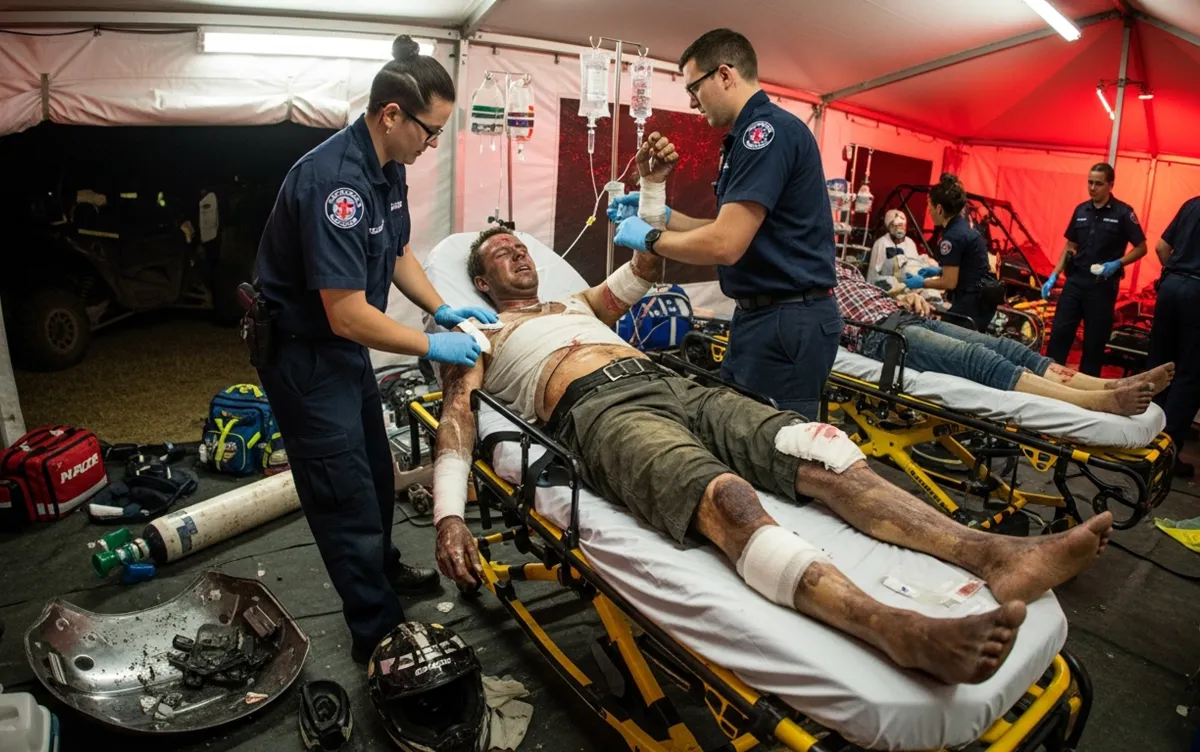
Second Priority: Medical Care
Assess injuries honestly. Burn injuries are not always immediately painful. Severe third-degree burns can destroy nerve endings, making them feel numb at first. Anyone who was exposed to flames or heat should be evaluated by medical professionals, even if they say they feel fine.
Seek medical treatment right away. Burn injuries worsen rapidly without proper treatment. Do not delay care to deal with the vehicle, insurance calls, or anything else. Nothing matters until everyone is medically evaluated and stable.
Watch for smoke inhalation symptoms in the hours following. Coughing, difficulty breathing, hoarseness, or confusion can indicate airway damage that may not be immediately apparent. These symptoms require emergency medical attention.

Third Priority: Document What Happened
Once everyone is safe and receiving care, what you do next can make all the difference, both for reporting the incident and for any future legal claim.
Do not allow anyone to move or dispose of the vehicle. The burned vehicle is evidence. Its condition, such as which components failed or where the fire started, can be critical to understanding what happened and to any legal case.
Photograph the scene as soon as it is safe to do so. Capture the vehicle, the surrounding area, the point of origin if visible, and any injuries before anything is disturbed.
Write down everything you remember about the moments before and during the fire. This includes any smells, sounds, where the smoke first appeared, and how quickly it spread. Memory fades fast under stress. Jot it down while it is fresh.
Collect names and contact information for any witnesses present. Eyewitness statements can help back up your description of what happened.
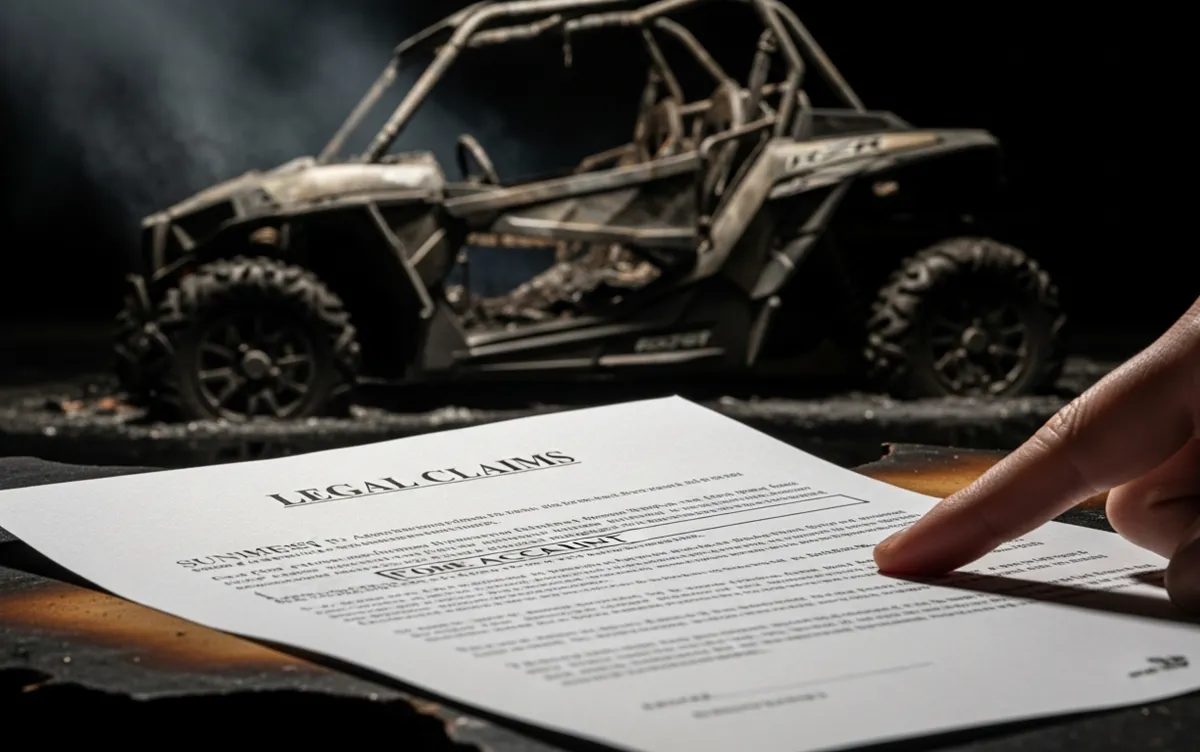
In the Following Days
Once everyone is safe and receiving care, what you do next can make all the difference, both for reporting the incident and for any future legal claim.
Report the incident to the CPSC. You can do this at SaferProducts.gov. Federal reporting is free, takes minutes, and helps document the ongoing pattern of RZR fires. Your report may protect the next family from suffering a similar accident.
Follow up on all medical care. Burns and smoke inhalation injuries can develop complications days after the event. Keep all medical appointments and follow your care team's instructions closely.
Do not post detailed accounts of the fire on social media. Public statements about the incident can affect legal proceedings.
Consult an attorney. Do this before speaking with Polaris or their insurance representatives. Polaris has handled hundreds of these cases, and their legal teams are always looking for a reason to minimize the harm their vehicles cause. You should have experienced legal counsel before communicating with the company at all.
Talk to a Team Who Understands
This checklist exists because Polaris has not fixed the problem. After hundreds of fires, many injuries, and even deaths, Polaris has refused to fix the underlying cause. The fires continue to this day.
The truth is that if you own a Polaris RZR Model 900, 1000, or Turbo, you are riding a vehicle with a known, unfixed design defect. This checklist may help you identify warning signs earlier, but it will not eliminate the risk.
If you or a loved one has been injured in a Polaris RZR fire, you deserve answers, and you may be entitled to substantial compensation. Our legal team has spent over nine years pursuing RZR fire cases across the country, and every completed case has been resolved through settlement.
Contact us today for a free consultation by phone or Zoom. We work on a contingency fee basis, so you pay no up-front costs and no fees at all unless we recover compensation for you.
The fires continue. The danger remains. But you don't have to face this alone.
Want our RZR Fire Alert and Update Newsletter? Subscribe to stay informed...
AI IMAGE DISCLAIMER: Some images on this website are AI-generated for illustrative purposes and are identified with watermarks
ATV Fire Lawyers
The legal muscle of Three Law Firms and Highly-Respected Lawyers, Fighting for Burned Riders Nationwide

NOTE on ATV Fire Lawyers:
The ATV Fire Lawyers is a collaboration of Wojtalewicz Law Firm Ltd., Hazelton Law Group, and SiebenCarey Personal Injury Law, independent Minnesota law firms. The ATV Fire Lawyers is not a separate law firm or partnership. Legal services are provided by the participating firms, each of which is licensed to practice law in Minnesota. For questions, contact Brian Wojtalewicz, Wojtalewicz Law Firm Ltd., 139 N Miles St, Appleton, MN 56208, (320) 289-2363.